MOVEPEARLAND.ORG
Pearland Sidewalk Action Plan
Build a connected sidewalk network, prioritize ADA access, and make delivery transparent so residents can see what’s next and why.
How Pearland delivers sidewalks
- Repairs (work orders): resident-reported hazards are inspected, prioritized, and fixed (raise/slice/replace).
- Corridor projects: continuous sidewalks are built as part of major roadway improvements.
- Citywide gaps & replacement: bond/CIP work (including TR2401) audits missing segments and rebuilds older networks.
What needs to be added
- One official hub page with the policy, scoring rubric, dashboard link, and an updated project list.
- A “new sidewalk gap” request pipeline (separate from repairs) that feeds into the CIP each year.
- A public completeness + curb ramp map so projects close real gaps and don’t create “sidewalk islands.”
- Clear targets + reporting so progress is measurable and funding decisions are easy to verify.
The plan (deliverables the City can adopt)
1) Sidewalk Program Hub
Create one City webpage that includes: the repair policy, the scoring criteria used to rank work, a dashboard link, and a rolling work list (scheduled / in progress / complete).
Publish monthly KPIs: requests received, inspected, completed, average days-to-repair, and top corridors by progress.
2) Sidewalk Gap / New Sidewalk Pipeline
Add a dedicated request form for missing sidewalks (not broken concrete). Score requests using a published rubric so residents can see how projects move from “requested” to “programmed.”
Scoring should include: safety risk, proximity to schools/parks, network connectivity, and ADA impact. Run selection annually aligned to the 5-Year CIP.
3) Completeness + Curb Ramp Inventory Map
Publish a public map that shows: missing sidewalks, missing/noncompliant curb ramps, known barriers, and priority corridors.
Update at least annually and use the map to pick projects that complete routes (not isolated segments).
4) Recurring “State-of-Good-Repair” Funding
Add a baseline annual sidewalk renewal budget so conditions don’t rebound after capital cycles. Prioritize by risk and ADA impact, then report results quarterly.
5) Prevent future sidewalk islands
Update development rules so new projects connect sidewalks to the existing network when feasible. If a connection isn’t feasible, require a fee-in-lieu dedicated to closing sidewalk gaps.
MovePearland Proposal vs Current Design
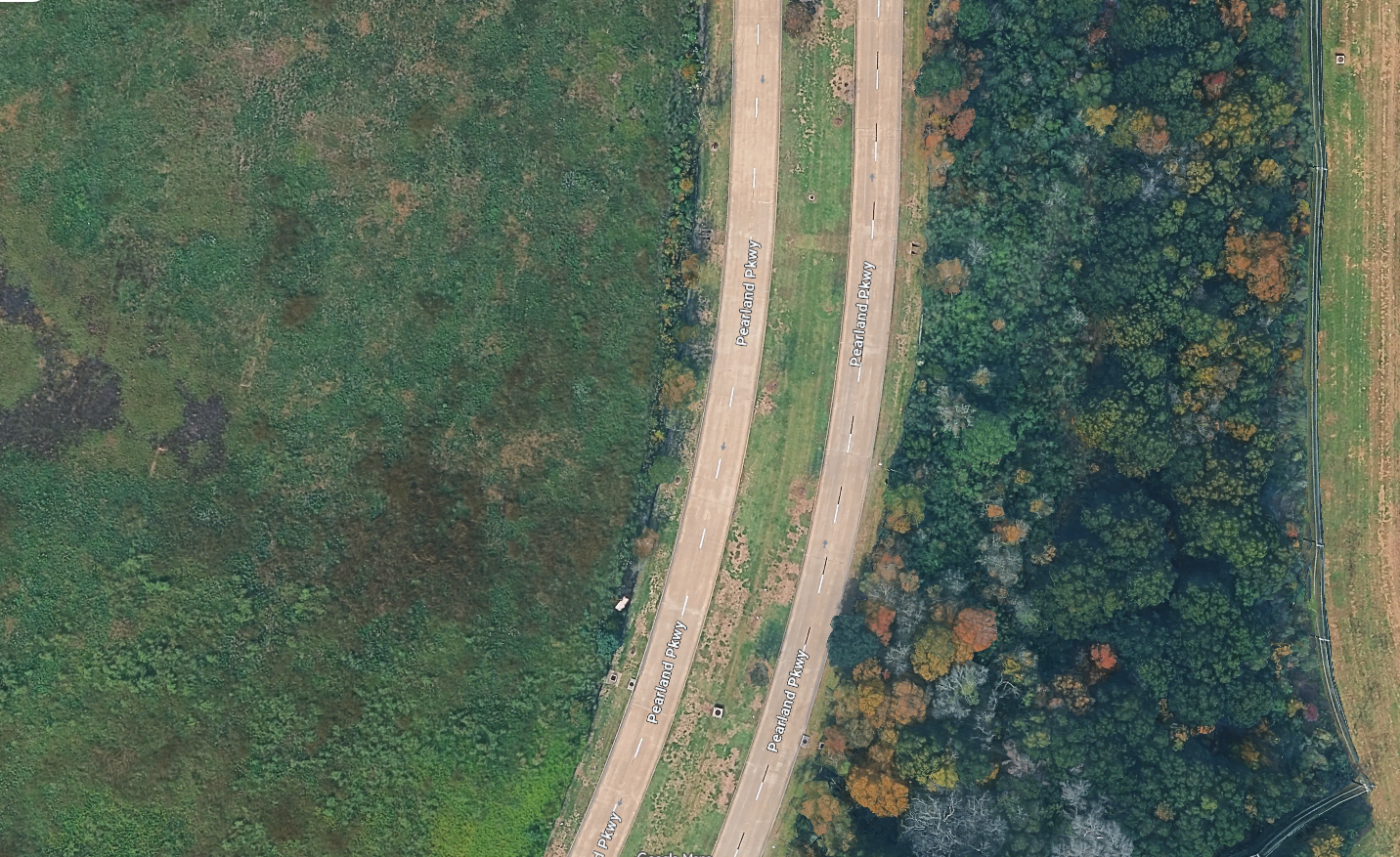
Compare the current design of Pearland Parkway with the MovePearland proposal for safer sidewalks, protected bike lanes, and a more connected street for everyone.
Pearland Parkway Today
The current corridor lacks sidewalks and protected bike lanes, leaving Pearland Parkway designed almost entirely around vehicle movement rather than safe access for everyone.
- ✕ No dedicated sidewalks
- ✕ No protected bike lanes
- ✕ Limited safe access for pedestrians and cyclists
- ✕ A street design that primarily serves cars
A Safer Future for Pearland Parkway
The MovePearland proposal reimagines this corridor with sidewalks, protected bike lanes, and a safer, more connected design that works for residents of all ages.
- ✓ Continuous sidewalks for safer walking
- ✓ Protected bike lanes separated from traffic
- ✓ Improved safety, comfort, and accessibility
- ✓ A corridor that serves more than just cars
Why this comparison matters
Pearland Parkway should not only serve drivers. By adding sidewalks and protected bike lanes, Pearland can create a safer, more modern corridor that improves mobility, accessibility, and quality of life for the whole community.